A Memoir of Healing Through Yoga and Breathwork
After a devastating childhood accident, Bradley L. Gabbert recovered the ability to walk and speak—but the deeper effects of trauma followed him for decades.
The Agreeable Child: A Yogic Journey from Tragedy to Triumph is his deeply personal account of passivity, anger, grief, and the gradual return to presence through breathwork, yoga, and self-reflection.
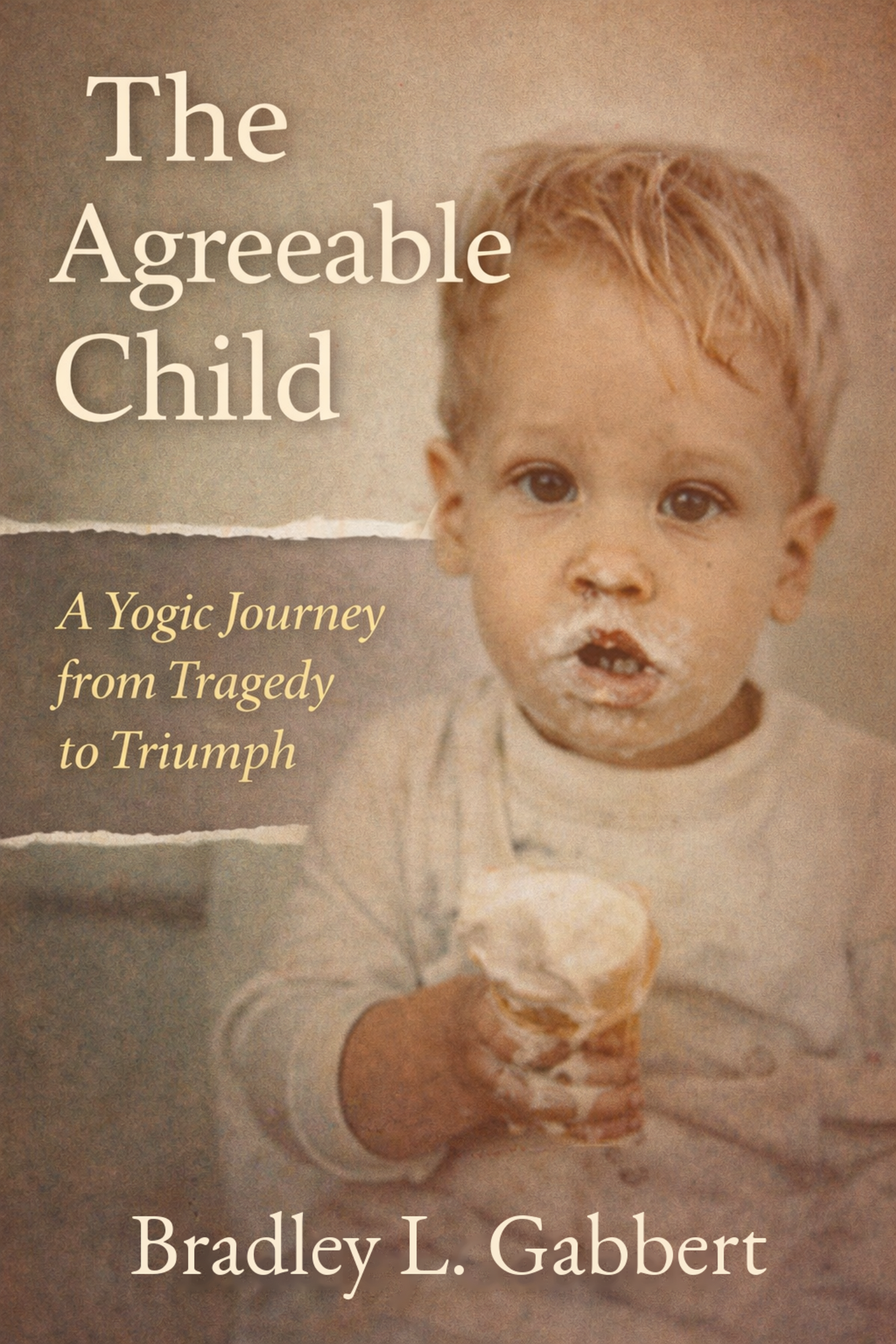

The Story Behind the Memoir
Recovery Was Only the Beginning
At two years old, I survived a devastating accident that left me unable to walk or speak. Eventually, I regained both abilities. But the effects of that experience would extend far beyond my physical recovery.
Over the years, I became someone others described as easygoing, thoughtful, and agreeable. I rarely questioned those descriptions. What I didn't recognize was how often I remained silent, avoided conflict, and allowed others to make decisions that should have been my own.
What appeared to be kindness and cooperation had gradually become a surrender of personal choice.
It would take nearly six decades—and the unexpected experience of a single deliberate breath—for me to begin recognizing that pattern and discovering another way to live.
IN THE AUTHOR'S OWN VOICE
Listen to the Foreword
Written and narrated by Bradley L. Gabbert
Complete foreword · 5 minutes, 38 seconds
Read the Complete Foreword
Prefer reading? Explore the five stages of the story in the author's own words.
-
From an engineering standpoint, this book exists to document the identification and correction of a flaw in a system.
For most of my life, that flaw was passivity.
It did not appear all at once, nor did it announce itself as a problem. It disguised itself as cooperation, agreeableness, and emotional maturity. It was reinforced by praise and protected by silence. I learned early that safety often followed compliance, and over time, compliance became indistinguishable from character.
The pattern was consistent. Whenever care, concern, or approval was offered, I yielded decision authority. Choices about education, career direction, ethical boundaries, and even intimate relationships were quietly deferred to others. What appeared externally as flexibility was, internally, a systematic forfeiture of agency.
-
The cost was cumulative.
Career paths were influenced by expectations that were not my own. Colleges were chosen by consensus rather than conviction. Ethical compromises were made in exchange for proximity to approval. Family obligations eclipsed marital needs. Harmony was preserved at the expense of honesty. In each case, the mechanism was the same: I surrendered my power of choice to avoid the perceived risk of rejection.
This pattern extended beyond action into speech. In social settings, I learned to delay contribution—sometimes for ten minutes or more—mentally rehearsing how to speak in a way that would not disrupt, offend, or inconvenience anyone. By the time I spoke, the conversation had often moved on. The system was inefficient, over-processed, and externally governed.
Silence, however, was rewarded. I was described as “easygoing,” “thoughtful,” and eventually “spiritual.” That label went largely unchallenged. It sounded complimentary and required no correction. But what was interpreted as spiritual depth was, in truth, emotional withdrawal. Silence had become a strategy, not a virtue.
The most insidious aspect of this flaw was its invisibility. Because passivity rarely produces immediate failure, it evades detection. It does not crash systems or trigger alarms. Instead, it slowly redirects a life away from its own design specifications. The damage is not dramatic; it is directional.
For decades, I did not recognize the pattern as a flaw. I rationalized it as kindness, humility, or adaptability. I believed I was choosing peace, when in fact I was avoiding agency. The system continued to function, but it was not mine.
-
This book does not document a philosophical awakening or a spiritual conversion. It records a process of system analysis.
The interruption began with something unexpectedly simple: breath.
Introduced during a therapy session, a single breathing exercise disrupted a feedback loop that had operated unquestioned for years. The effect was subtle but unmistakable. For the first time, I noticed a measurable gap between stimulus and response. That gap created the possibility of choice.
That moment did not resolve the flaw. It revealed it.
-
Breath led me to yoga—not as belief, identity, or performance, but as a practical method of restoring internal regulation. On the mat, response latency decreased. Awareness increased. Sensation replaced rumination. Choice became embodied rather than negotiated.
What followed was not immediate transformation but gradual recalibration. Patterns that once felt inevitable became observable. Silence was no longer automatic. Compliance was no longer reflexive. The system began to return authority to its original source.
-
This book traces that process in detail.
It does not offer instruction. It does not promise outcomes. It documents what occurred when a long-standing failure mode was identified, tested, and incrementally corrected. The results were neither instant nor permanent. But they were measurable.
If you recognize similar patterns in your own life—if you find yourself yielding choices to preserve approval, mistaking silence for depth, or outsourcing agency in exchange for belonging—this book may serve as a point of interruption.
Sometimes a system does not need force.
It needs awareness.
And sometimes, awareness begins with a single, deliberate breath.
“The damage is not dramatic; it is directional.” — The Agreeable Child
Interactive preview: You can open each accordion above to see the full written foreword.
“At two years old, I lost my voice. Sixty years later, I found it.”
Silence and Voice
How trauma, fear, and the desire to please can gradually separate a person from their own needs and choices.
The Body Remembers
How emotions that cannot be expressed may continue to appear through tension, anger, avoidance, or disconnection.
Breath and Presence
How simple practices can create the space needed to pause, listen inwardly, and respond with greater awareness.
This Book May Speak to You If…
You have spent much of your life trying to keep the peace.
You find it difficult to express your needs or make your own choices.
You are carrying the long-term effects of childhood trauma.
You are exploring breathwork, mindfulness, or yoga.
You are trying to become more present in your closest relationships.
You believe healing can begin later in life.
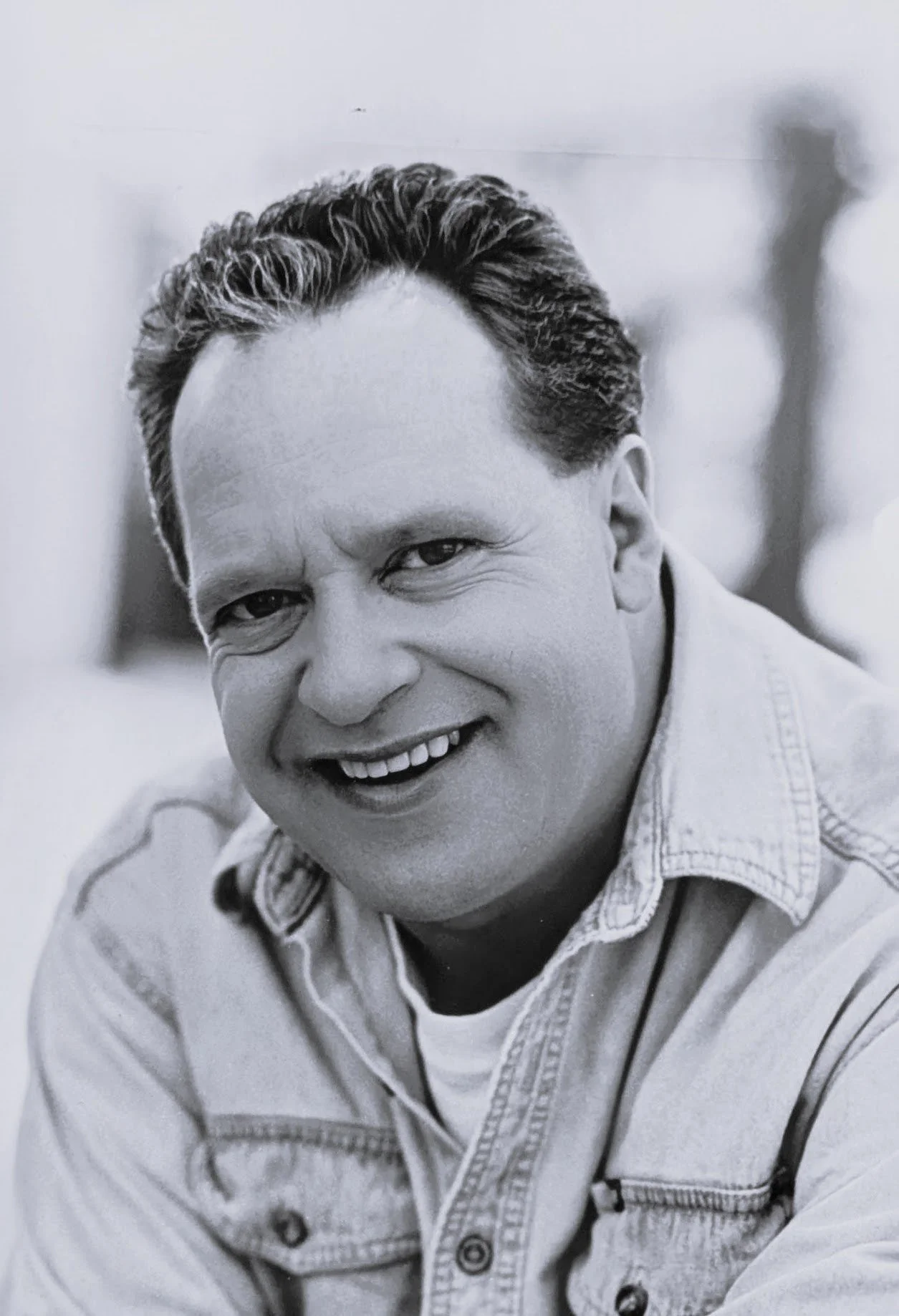
Why I Wrote The Agreeable Child: A Yogic Journey from Tragedy to Triumph
I first began writing because I could see that my passivity was getting in the way of my most important relationships. I had spent too much of my life giving my voice and choices to others—often at the expense of the people I loved.
This book became a way to understand where that pattern began, how it shaped my life, and what helped me begin to change. I share the story not because my healing is complete, but because finding my voice has given me a new way to be present.
“A beautiful testimony. The Author’s insightful journey from feeling invisible and hopeless to finding the power of his inner voice and presence.”
Title: The Agreeable Child
Subtitle: A Yogic Journey from Tragedy to Triumph
Author: Bradley L. Gabbert
Category: Memoir • Personal Growth • Trauma Recovery • Yoga
Format: Hardcover, Paperback and Kindle
Publication year: 2026
The Journey from Tragedy to Triumph Begins with a Breath
Discover a deeply personal story of survival, silence, relationship, and the gradual courage to become fully present.